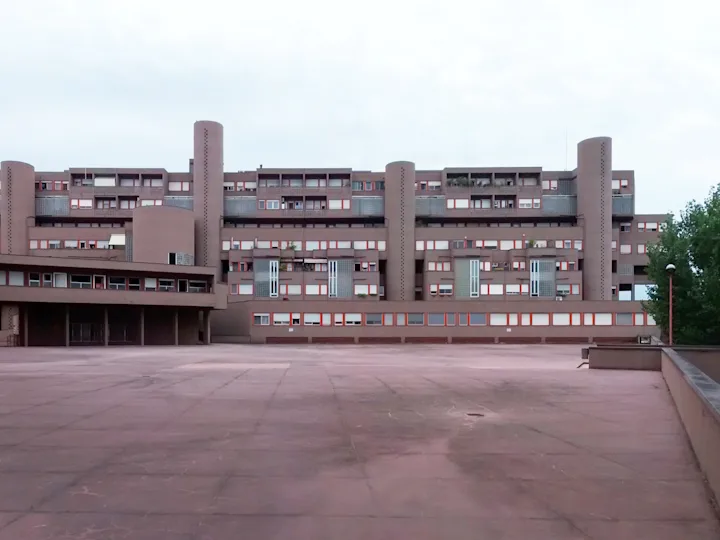
Milan
3 buildingsBrutalist · Structuralist
Monte Amiata Housing Complex
The Vandelay collection
Start in Milan with Monte Amiata’s housing complex and the Vertical Forest, then explore modernist churches and sculptural concrete buildings elsewhere in the collection, including Rome’s MAXXI museum.
9 buildings7 cities in this collection

Where to begin
The largest city collections are a useful starting point. Follow a guide to explore its buildings and architectural context.
Brutalist · Structuralist
Monte Amiata Housing Complex
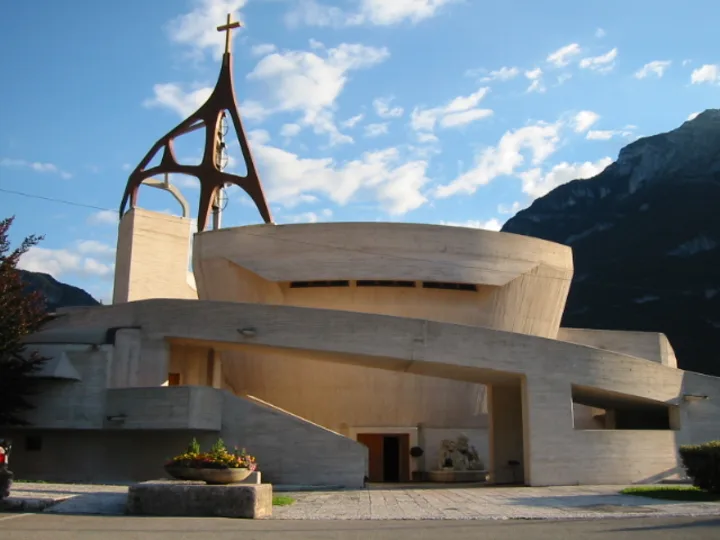
Organic architecture · Modernist
Church of the Immaculate Mary
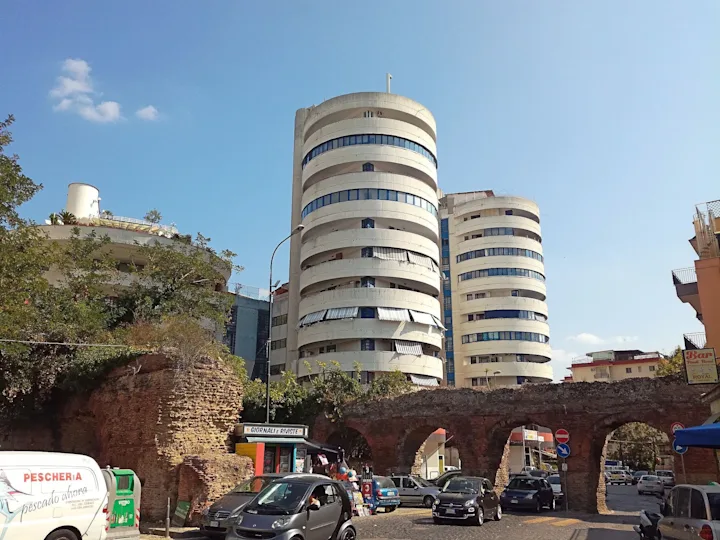
Brutalist · Modernist
Piazza Grande residential complex
Places to look closer
A selection from our Italy collection. Each card takes you to the corresponding city guide.
 Sciacca
 Brutalist
Giuseppe Samonà, Alberto Samonà
Explore Sciacca guide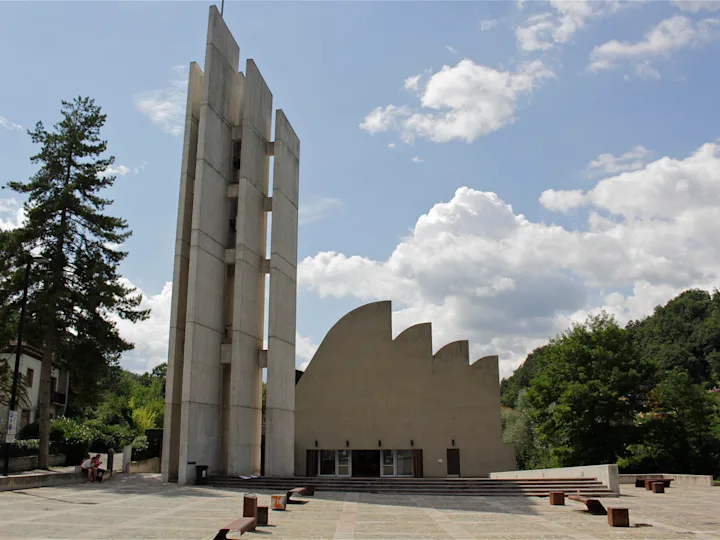 Riola
Riola Modernist
Alvar Aalto
Explore Riola guideMilan Brutalist · Structuralist
Carlo Aymonino, Aldo Rossi
Explore Milan guide Rome
Rome Deconstructivist
Zaha Hadid Architects
Explore Rome guide Milan
Milan Contemporary · Futurist · Green architecture
Stefano Boeri Architetti
Explore Milan guide Syracuse
 Brutalist · Modernist · Sacred
Michel Andrault, Pierre Parat
Explore Syracuse guide Milan
Milan Brutalist · Italian Rationalism
Luigi Moretti
Explore Milan guideNapoli Modernist · Brutalist
Aldo Loris Rossi
Explore Napoli guideLongarone Modernist · Organic architecture
Giovanni Michelucci
Explore Longarone guideFollow an interest
These styles are the most represented in our Italy collection. Choose a city to see local examples.
Look for Teatro Popolare Samonà in Sciacca and Monte Amiata Housing Complex in Milan .
Look for Riola Parish Church in Riola and Basilica Santuario Madonna delle Lacrime in Syracuse .
Look for Monte Amiata Housing Complex in Milan .
The wider context
Italy's postwar architecture reveals a restless dialogue between monumental tradition and radical experiment. Across 7 cities and 9 catalogued structures, the country's built landscape reflects a generation of architects who worked at the intersection of ideology, material innovation, and Mediterranean context. The result is a concentrated body of work where Brutalism takes on sculptural ambition, Modernism adapts to southern light, and Contemporary practice pushes ecological boundaries.
Milan holds the largest share with 3 buildings, followed by Longarone and Napoli. From Alvar Aalto's only church in Italy to Zaha Hadid's MAXXI museum in Rome, Italian architecture rewards close reading — each building carries layers of political context, regional identity, and formal invention that distinguish it from its neighbours.
Italian architecture of the 20th and 21st centuries carries a distinct vocabulary — shaped by Mediterranean climate, political upheaval, and a persistent tension between classical heritage and Modernist ambition. Here are the key threads to follow.
Italian Brutalism diverges from the Northern European model. Where British Brutalism favours gridded repetition, Italian architects treated raw concrete as a sculptural medium. Luigi Moretti's residential complex at Corso Italia in Milan anticipated the style with its raw concrete surfaces and monumental massing, while Carlo Aymonino and Aldo Rossi's Monte Amiata Housing at Gallaratese pushed social housing toward architectural theory. Look for:
Cantilevered volumes and angular overhangs creating deep shadows in the southern sun
Textured concrete surfaces with formwork patterns used as deliberate ornament
Monumental civic scale even in residential projects — social housing as urban statement
Italian Modernism absorbed international principles but filtered them through local climate and craft. Giovanni Michelucci's Church of the Autostrada near Florence demonstrates this synthesis — a Sacred building whose organic concrete shell responds to the Tuscan landscape. Key recognition points:
Deep loggia, perforated screens, and shaded terraces responding to sun angles
Integration of local stone and marble alongside concrete and steel
Organic forms in sacred architecture — curved shells and parabolic vaults replacing flat roofs
Recent Italian architecture has moved toward ecological innovation and Deconstructivist form. Stefano Boeri's Bosco Verticale in Milan pioneered the living-facade concept, while Zaha Hadid's MAXXI museum in Rome challenged the white-cube gallery model. Watch for:
Living facades and vertical forests — architecture as urban ecosystem (Milan leads here)
Fluid, non-orthogonal museum spaces that challenge the white cube model
Dialogue between historic urban fabric and radical insertions — new buildings negotiating ancient context
Italy's modern architecture stands out through its insistence on the building as a total composition. Architects here treated housing blocks, churches, and museums as opportunities for formal invention rather than functional problem-solving. The combination of extreme craft quality, political ambition, and Mediterranean sensuousness produces buildings that reward slow, careful observation — exactly the kind of architecture best experienced on foot, with context.
Take it with you
Find documented buildings on the map, explore their stories, and see nearby places with live distances in AR.